



News Center
How to Choose a Liquor Bottle for Shelf Appeal and Shipping Safety
How to Choose a Liquor Bottle for Shelf Appeal and Shipping Safety
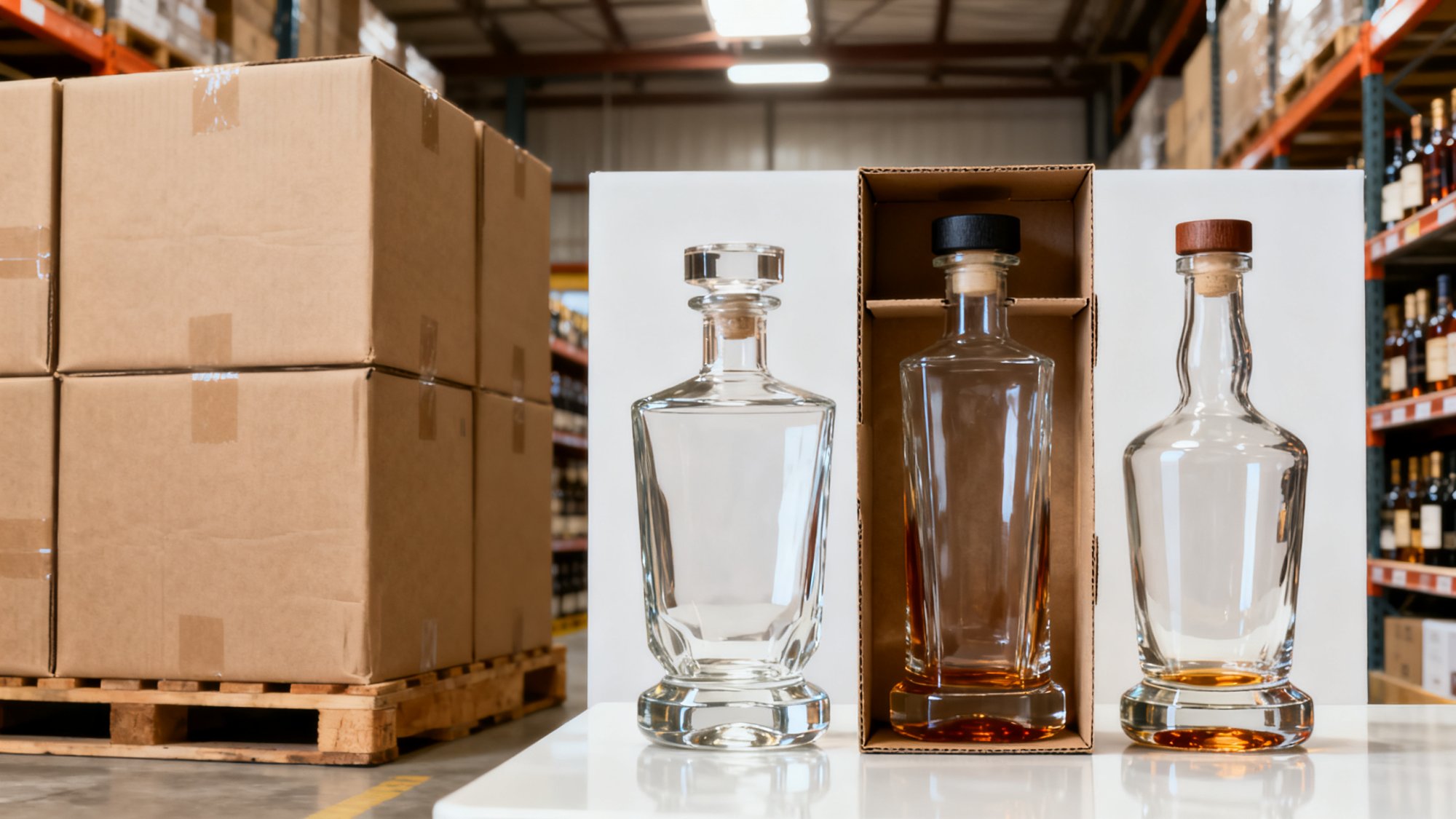
Choosing the right Liquor Bottle is not only about filling a container. It shapes first impressions, supports brand value, and reduces shipping risk.
In practical sourcing work, one bottle decision can affect display performance, packing cost, breakage rates, and retailer feedback at the same time.
That is why a well-chosen Liquor Bottle should look strong on the shelf and stay strong in transit.
This guide breaks down the selection process into clear checkpoints, so decisions stay commercial, realistic, and easier to compare across suppliers.
Start with Shelf Appeal, Not Decoration Alone
A Liquor Bottle wins attention before a buyer reads the label. Shape, glass clarity, color, and proportions do most of the visual work.
Tall and slim bottles often suggest premium positioning. Shorter, broader formats can communicate heritage, stability, or stronger value.
Clear flint glass supports product visibility. Amber or darker tones add protection and create a more mature, traditional look.
However, shelf appeal should never be separated from production reality. A dramatic Liquor Bottle that is hard to pack or label creates downstream cost.
Visual details that influence buying decisions
- Shoulder design affects silhouette recognition from a distance.
- Base thickness can signal quality, but extra weight raises logistics cost.
- Neck finish changes closure compatibility and pouring experience.
- Embossing adds brand texture, though it may complicate mold cost.
A good rule is simple. If the Liquor Bottle looks distinctive in three seconds and still fits the packing line, it deserves serious review.
Evaluate Structural Strength for Real Shipping Conditions
Shelf beauty matters, but shipping damage quickly erases that value. The best Liquor Bottle must perform under vibration, stacking pressure, and handling impact.
This becomes even more important for export shipments, mixed pallets, and long distribution routes with repeated loading events.
Bottle strength is not just about thicker glass. Weight distribution, wall consistency, and design geometry matter just as much.
Key stress points to review
- Heel area, where impact damage often starts.
- Shoulder transitions, especially on angular designs.
- Neck and finish zones under capping force.
- Base stability during conveyor movement and pallet stacking.
In actual business settings, attractive but fragile custom bottles often cause hidden losses through claims, repacking labor, and delayed replenishment.
That is why supplier samples should be tested under realistic transport conditions, not judged by appearance alone.
Practical tests worth requesting
- Top load testing for stacking resistance.
- Impact testing for weak-point identification.
- Thermal shock testing when filling conditions vary.
- Carton drop trials with actual dividers and closures.
Balance Bottle Weight with Freight Efficiency
A heavy Liquor Bottle can feel premium in hand. Still, weight increases shipping cost, carbon impact, and manual handling strain.
Lighter glass designs are now more common, especially where volume shipping and sustainability targets matter.
The key is not choosing the lightest option. It is choosing the lightest Liquor Bottle that still meets strength, presentation, and filling requirements.
Questions to compare weight options
- Does extra base glass truly improve perceived value?
- Will the added weight reduce pallet efficiency?
- Can a redesigned profile keep appearance while cutting grams?
- Does the freight model punish heavier case packs?
From a cost-control perspective, small weight savings per Liquor Bottle can become significant across annual purchasing volumes.
Check Closure Compatibility and Filling-Line Fit
A Liquor Bottle should never be selected in isolation. It must work smoothly with closures, labels, filling equipment, and secondary packaging.
Neck finish accuracy is especially important. A mismatch can lead to leakage, torque problems, or sealing failures during transport.
Even a visually strong bottle becomes a weak commercial choice if it slows line speed or causes higher rejection rates.
Review these integration points early
- Closure type, finish standard, and sealing method.
- Label panel size and curvature.
- Conveyor stability and star wheel handling.
- Case dimensions and divider compatibility.
This is also where cross-functional review helps. Packaging, operations, and logistics teams usually spot different risks in the same Liquor Bottle design.
Compare Standard and Custom Liquor Bottle Options
Standard bottles usually offer faster lead times, lower mold cost, and easier replacement planning. Custom designs offer stronger brand distinction.
The right choice depends on launch volume, timeline, market positioning, and tolerance for development complexity.
If sales forecasts are uncertain, starting with a proven Liquor Bottle can reduce exposure while keeping future redesign options open.
Assess Supplier Capability Beyond the Sample
A beautiful sample is useful, but supply consistency matters more. The real question is whether the supplier can repeat quality at scale.
For any Liquor Bottle program, process control, mold maintenance, and defect management are often more important than brochure claims.
What to verify during supplier evaluation
- Dimensional consistency across batches.
- Defect rates for bubbles, cracks, and finish flaws.
- Testing records for strength and thermal performance.
- Lead-time reliability during peak demand periods.
- Ability to support packaging optimization if breakage appears.
Recent market shifts make this even more relevant. More buyers now value resilient supply over minor piece-price savings.
Use a Practical Decision Framework
When several bottle options look similar, a scoring model helps remove guesswork. It also makes internal approval easier.
A useful Liquor Bottle review framework usually combines appearance, performance, cost, and supply reliability.
- Define must-have requirements for size, finish, and packing.
- Score shelf appeal using real retail context, not isolated photos.
- Test shipping safety with actual closures and cartons.
- Calculate total landed cost, not unit price alone.
- Review supplier stability and recovery plans.
This approach usually reveals the strongest Liquor Bottle choice faster than debating design preferences alone.
Final Takeaway
The best Liquor Bottle is not simply the most eye-catching or the heaviest. It is the option that balances brand impact, structural reliability, and operating efficiency.
A strong decision usually comes from comparing visual appeal, closure fit, shipping performance, and supplier consistency as one package.
When those factors align, the chosen Liquor Bottle supports retail presence, protects product quality, and reduces avoidable logistics costs.
For the next sourcing round, build a short evaluation matrix, test under real transport conditions, and choose the Liquor Bottle that performs well beyond the sample table.