



News Center
Common Liquor Bottle Sealing Problems and How to Prevent Leaks
Why Liquor Bottle Leaks Usually Start Before Transport
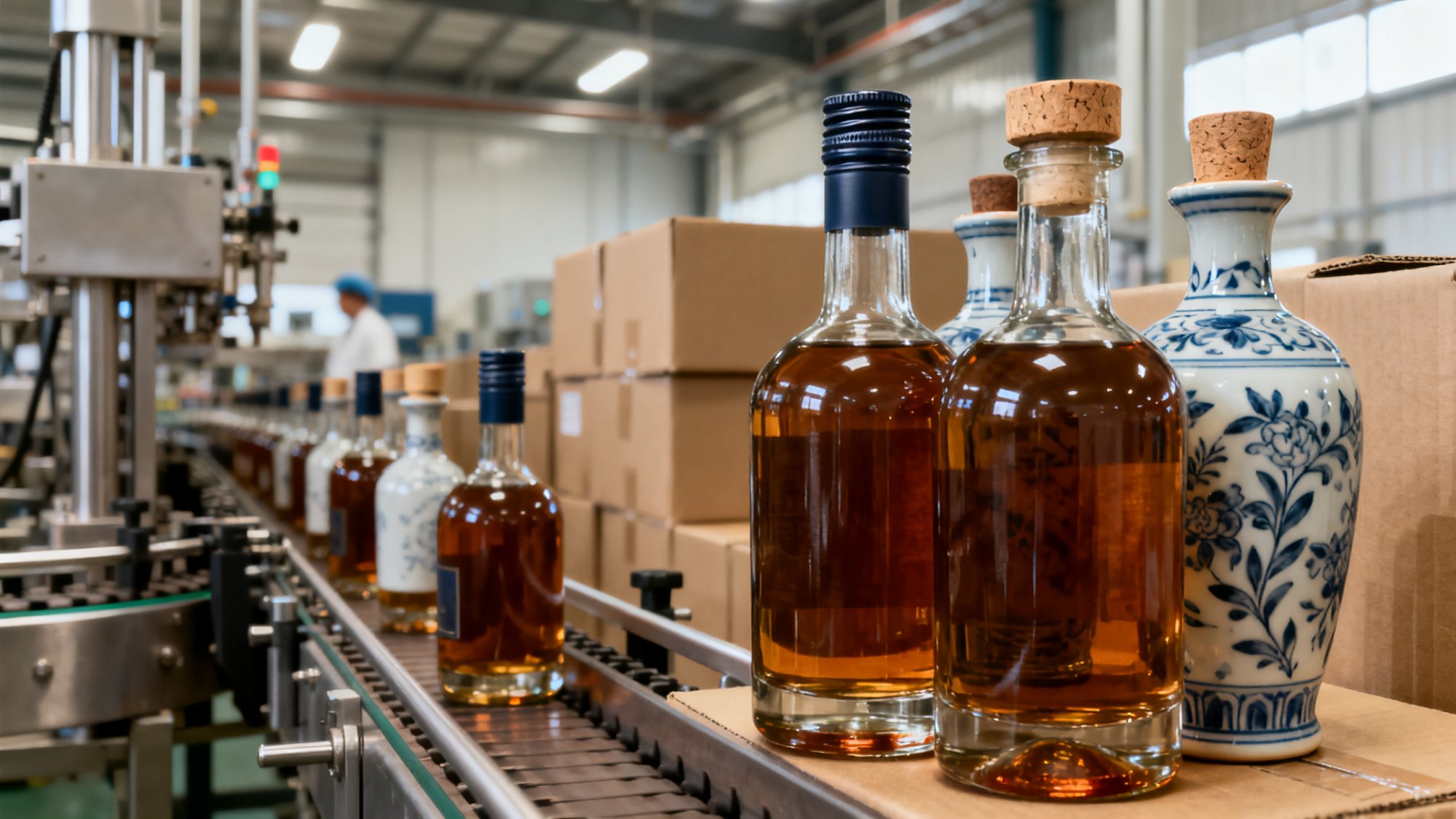
A leaking Liquor Bottle rarely fails for one reason alone. In most cases, glass finish quality, closure fit, filling conditions, and handling stress interact.
That is why sealing control in glass and ceramic materials work cannot stop at the cap specification. The bottle neck, sealing surface, and process stability matter just as much.
When leaks appear, the losses spread quickly. Product loss is obvious, but contamination risk, label damage, carton weakening, and complaint handling often cost more.
In actual use, different Liquor Bottle applications fail in different ways. A bottle stored upright in a stable warehouse faces a very different sealing challenge from one moving through export logistics.
A practical review begins with the real scene: how the bottle is filled, how long it sits, what temperature swings it sees, and how often it is moved.
Different use conditions change the sealing priority
Many teams assume one closure design should work across all Liquor Bottle lines. That sounds efficient, but the field conditions are usually less uniform.
A short local distribution cycle may tolerate minor liner variation. Long-distance shipping with stacking pressure and temperature fluctuation usually will not.
Ceramic-decorated bottles and heavy flint glass bottles also introduce different handling behavior. Weight, center of gravity, and neck geometry influence sealing consistency during capping and transport.
More often, the key judgment is not whether a Liquor Bottle closure is rated as leak resistant. It is whether the whole package system stays sealed under real loading conditions.
A quick comparison of common conditions
On filling lines, small dimensional errors become leak paths
The most common Liquor Bottle sealing issue on production lines is not dramatic breakage. It is subtle mismatch between the closure and the glass finish.
Chipped top finish, uneven land area, out-of-round necks, or flash at the sealing surface can prevent full contact. Even good caps cannot compensate for poor glass geometry.
This matters more on fast lines. A capper running at speed can hide unstable application torque for hours before visible leakage appears in packed cartons.
For screw-cap Liquor Bottle formats, the useful check is not only average torque. It is torque distribution, thread engagement, and removal consistency after 24 hours.
For bar-top or cork-style closures, insertion force and seating depth deserve equal attention. Too shallow invites seepage. Too deep may damage the closure body or distort the neck area.
- Measure neck finish dimensions by batch, not only at mold approval.
- Inspect sealing land for chips, waviness, and mold seam interference.
- Match closure compression range to actual glass variation.
- Run leak tests after capping and again after short settling time.
Storage conditions create slower but expensive Liquor Bottle failures
Not every leak appears on the day of filling. Some Liquor Bottle packages leave the line in good condition, then fail after weeks in storage.
This is common where warehouses face seasonal heat, dry air, or repeated temperature change. Sealing materials can relax, shrink, harden, or lose elastic recovery.
Cork and synthetic stoppers behave differently here. Natural cork may react to humidity loss. Some polymer liners perform well at first, then lose contact pressure over time.
Glass and ceramic material specialists usually focus on bottle integrity first. Yet seal retention over time depends on the interface, not just on bottle strength.
A more useful storage review checks upright duration, cap relaxation, evaporation signs, and residue around the finish. Those signals often appear before a full complaint case develops.
Where teams often misread storage leaks
One frequent mistake is treating all seepage as a closure defect. In practice, slight finish warpage, filling temperature, and headspace variation may be equally responsible.
Another is checking only fresh samples. A Liquor Bottle that passes immediate vacuum or inversion testing may still fail after prolonged exposure to warm storage conditions.
Transport stress changes what “sealed” really means
A Liquor Bottle moving through domestic delivery and one crossing oceans do not face the same risk profile. Vibration and repeated shocks slowly challenge the closure interface.
Thermal cycling adds another layer. Expansion of liquid, headspace pressure shifts, and closure material movement can turn a marginal seal into an active leak path.
In this setting, leak prevention has to include package support. Carton partitions, pallet stacking pattern, and bottle-to-bottle contact can amplify neck stress.
This is where heavy glass Liquor Bottle designs need special attention. Extra mass looks premium, but it increases inertial force during drops and vibration.
- Test filled samples after vibration and temperature cycling, not only at room conditions.
- Check neck and closure retention after side loading in secondary packaging.
- Review whether decorative elements affect bottle contact points in cartons.
- Confirm the seal still performs after repeated handling, not just one drop event.
Premium bottle designs need closer fit checks, not just stronger closures
Ceramic-coated finishes, embossed necks, bar-top stoppers, and custom glass shapes often raise sealing complexity. The issue is usually fit consistency, not closure strength alone.
In premium Liquor Bottle projects, visual design can slightly alter neck finish control. If the sealing surface becomes less uniform, leak risk rises even when the closure material looks upgraded.
A useful rule is to separate decorative tolerance from sealing tolerance. The visible neck style can vary within design limits, but the sealing land should remain tightly controlled.
This is also where pilot runs matter. Small-scale validation catches stopper rocking, liner folding, or cap skew before large batches turn into expensive returns.
Practical checks before release
Leak prevention works better when inspection follows the real failure path
When a Liquor Bottle leaks, the best response is to trace the actual path of failure. Was the seal never formed correctly, or did it degrade later?
That distinction changes the fix. Early failures point toward finish defects, capping setup, or closure mismatch. Delayed failures often indicate material relaxation or transport stress.
It also helps to compare complaint samples with retained production samples from the same mold set and closure lot. Random checks alone may miss the pattern.
In many operations, the biggest blind spot is focusing on purchase specifications while ignoring process drift. A Liquor Bottle system that is technically compliant can still be operationally unstable.
What to review next before sealing issues become repeat losses
A reliable Liquor Bottle seal depends on fit, process control, and realistic testing. No single inspection point can replace that combination.
Start by mapping the actual use conditions for each bottle format. Then compare neck finish consistency, closure behavior, storage exposure, and transport demands as one system.
Where risk is higher, define acceptance standards around sealing surface quality, torque range, aging checks, and transit simulation rather than appearance alone.
That approach usually reduces leakage, protects package reliability, and makes Liquor Bottle quality decisions more consistent across changing production and logistics conditions.